
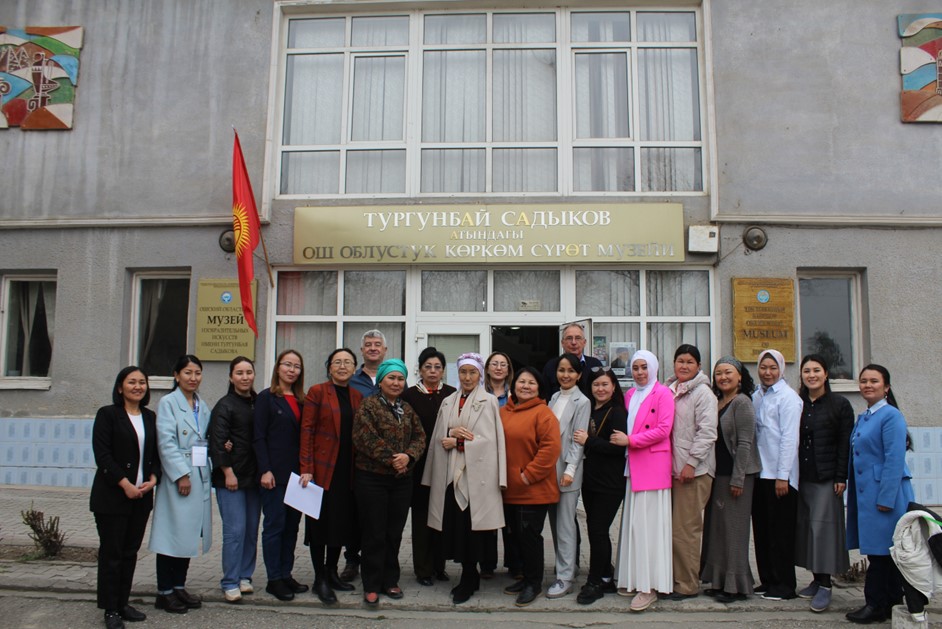
PROJECT BRIEF
1. Project design & planned interventions
Objectives: Ensured economic and legal empowerment of vulnerable young women and enhanced gender equality in the southern Kyrgyzstan (Impact); 100 young women in all their diversity became a driving force in creative industries sector, improved their access to social entrepreneurship opportunities and alternative livelihoods (Outcome 1); 20 CSOs are efficient in advocacy for reinforcing gender equality and women empowerment (Outcome 2).
Duration: 01 March 2024 – 31 August 2026 (30 months)
Targeting the most vulnerable: Reaches 100 rural women joining 10 Women Creative Hubs, focusing on unemployed women, single/surviving mothers, ethnic minorities, women with disabilities, mothers of handicapped children, repatriates, victims of violence, and those restricted by heavy childcare duties or mobility constraints.
Integrated multi-layered approach: Combines economic self-reliance, social protection, capacity building, civil society strengthening, green practices, and municipal policy engagement into a single unified model.
Infrastructure-first entry: Operates through 10 Women Creative Hubs, offering shared equipment, dedicated production spaces, and peer mentoring to eliminate capital startup barriers.
Social partnerships: Leverages cross-sectoral partnerships with CSOs, regional and local authorities, creative industry & tourism associations, higher education & culture institutions.
2. Core activities at a glance (387 total events):
- 157 training and interactive workshops on entrepreneurship, business planning, marketing, leadership, rights advocacy, and skill-building in creative industries and sustainable tourism for Women Creative Hub members; on gender analysis and civil society monitoring for CSOs and on securing regional development funding for municipal projects for local authorities.
- 110+ tailored consultations & support sessions on specialised individual and group guidance covering psychological support, combating professional burnout, legal rights, gender sensitivity, and strategic local advocacy.
- 57 advocacy & community awareness-raising events promoting gender equality, economic rights, and local civic participation to foster inclusive community environments. Public dialogue highlighted by Toguz-Toro Rayon State Administration on its social page
- 29 public festivals, fairs & press tours connecting over 5,000 citizens, consumers, and stakeholders directly with beneficiary-crafted textiles, artisanal products, and sustainable tourism services.
- 25 vocational Internships & practical placements across local craft hubs and eco-tourism sites including formal competency certification for Kyzyl-Kiya Hub - free skill validation at T. Kulatov Technical College for 8 vulnerable young women, enabling their transition from informal work to certified tailoring professionals.
- 9 knowledge exchanges & peer learning visits including 4 South-North & South-South interregional study tours and 5 peer-to-peer field visits to share best practices, foster collaboration, and replicate successful hub models.
3. Measurable results
- 135 vulnerable women trained (vs. 100 planned): Comprehensive training delivered across business planning, digital marketing, sewing, artisan crafts, eco-tourism, leadership, and rights protection.
- Job creation and inclusion: 100+ total jobs sustained and supported for hub members including 23 women with disabilities and 10 mothers of handicapped children, with 40+ exhibiting stable, long-term employment features.
- First-time income earners: over 50 women secured their first independent personal income, with 16 formally registering as individual entrepreneurs.
- Direct economic output: Generated 7 mln+ KGS in product sales, textile crafts, catering, tour guiding and guest services by Women Creative Hub members.
- 11 Women Creative Hubs established (vs. 10 planned), including 7 handicraft- and 4 tourism-oriented: Functioning as localised production, learning, and civic spaces (8 premises secured rent-free directly from local municipalities, schools, and CSO partners).
- Digital learning resources: Produced 28 instructional video modules (over 5 hours of content) covering creative industries, carpet weaving, and hospitality services, creating a permanent digital knowledge base for skills development and replication.
- Women Creative Hubs are equipped by 158 units of production, tourism, and digital equipment, including 33 units procured directly by the SEDEP project, 50 units through the CSO-led sub-grants, and 75 units contributed by Hub members, other donors and business sector donations. The equipment includes 4 traditional yurts, 23 professional sewing machines, 7 industrial ironing units, tufting equipment for carpet production, 57 pieces of furniture, professional photo and video equipment with computer workstations, a drone for tourism promotion, souvenir magnet production equipment, and other specialised tools, significantly strengthening the production capacity and sustainability of the Hubs. Sedep-Toguz-Toro Hub Yurt Host Accommodation
- 41 rural guesthouses established an online presence after tourism hub women-members applied newly acquired digital skills to register their family homes & yurts on leading tourism platforms, expanding market access and attracting internal and external tourists.
- 11 Community Savings Groups: An active internal capital revolving mechanism that has mobilised 325,585 KGS in collective savings (as of July 2026), enabling members to finance internal and/or collective emergency needs through locally managed resources.
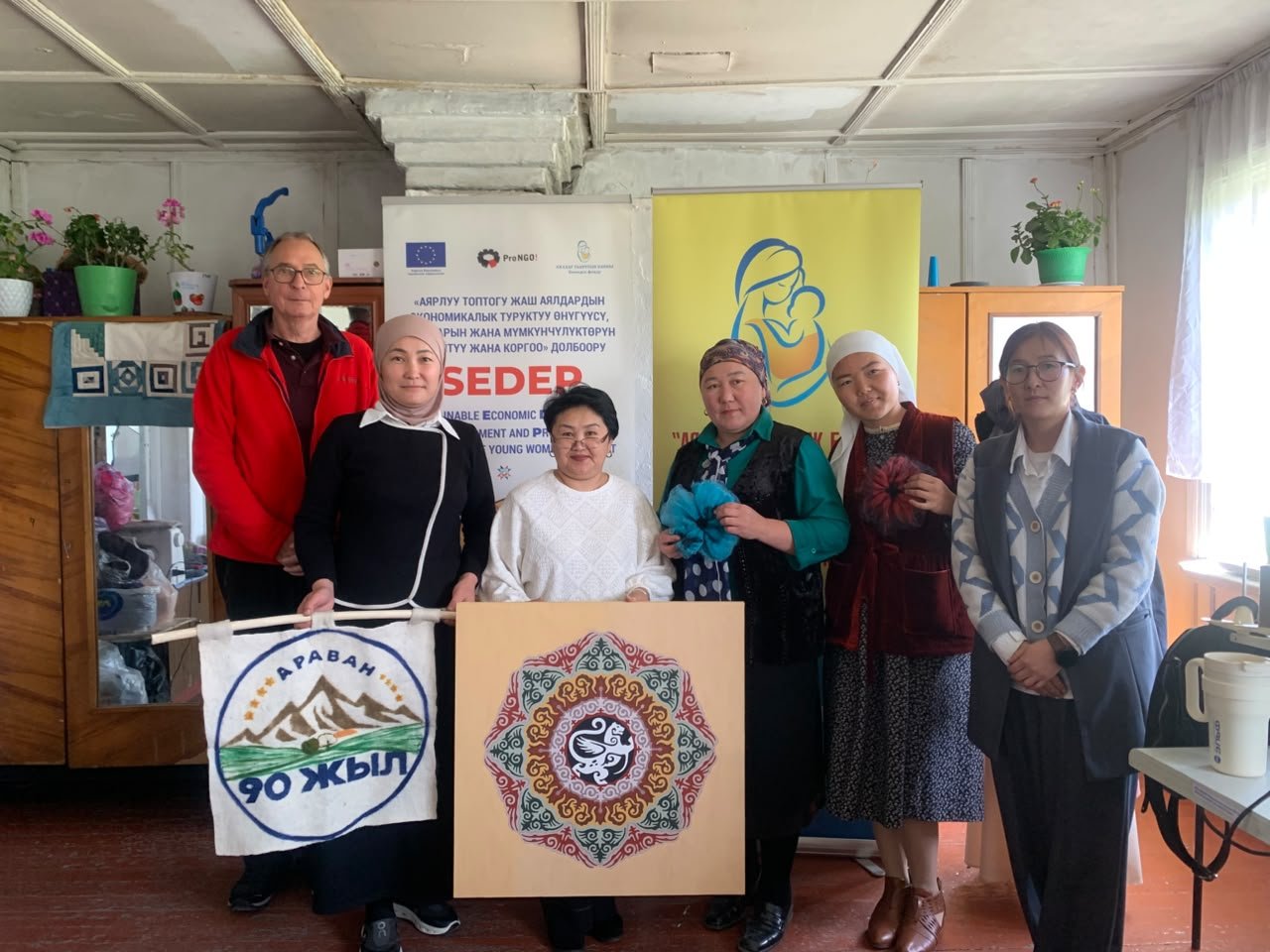
- SEDEP trademark registration: The official registration of the SEDEP trademark with the Ministry of Science, Higher Education and Innovation of the Kyrgyz Republic provides crucial legal protection and brand security beyond project completion. It establishes a unified, recognisable visual identity across regional markets, boosting commercial visibility and instilling long-term consumer trust in authentic, women-crafted products produced by Hub members.
- Contribution to the circular economy: 1,300+ kg of textile waste has been recycled into marketable handicrafts and home décor products, demonstrating how environmental sustainability can be transformed into economic opportunity. By combining traditional kurak craftsmanship with modern design, women entrepreneurs have converted production waste into value-added products while generating new sources of income and reducing environmental impact. Azattyk Report on Sedep-Manas Recycling
- Green entrepreneurships with authorities: Complementing the project's tourism, handicrafts, and local resource initiatives, 9 community eco-actions were implemented in partnership with state environmental authorities, rayon-level state administrations, and local self-government bodies, promoting sustainable resource management and environmental stewardship.
- University-Hubs partnerships as an added value: While student internships were not part of the original project design, 50+ young student-girls from four universities (Osh State University, Osh Technological University, Kyrgyz-Uzbek International University, and Jalal-Abad State University) completed practical placements at SEDEP Hubs. This unexpected added value transformed the Hubs into community-based learning platforms, with women beneficiaries acting as trainers, extending the project's impact through intergenerational knowledge transfer and strengthened university-community partnerships.
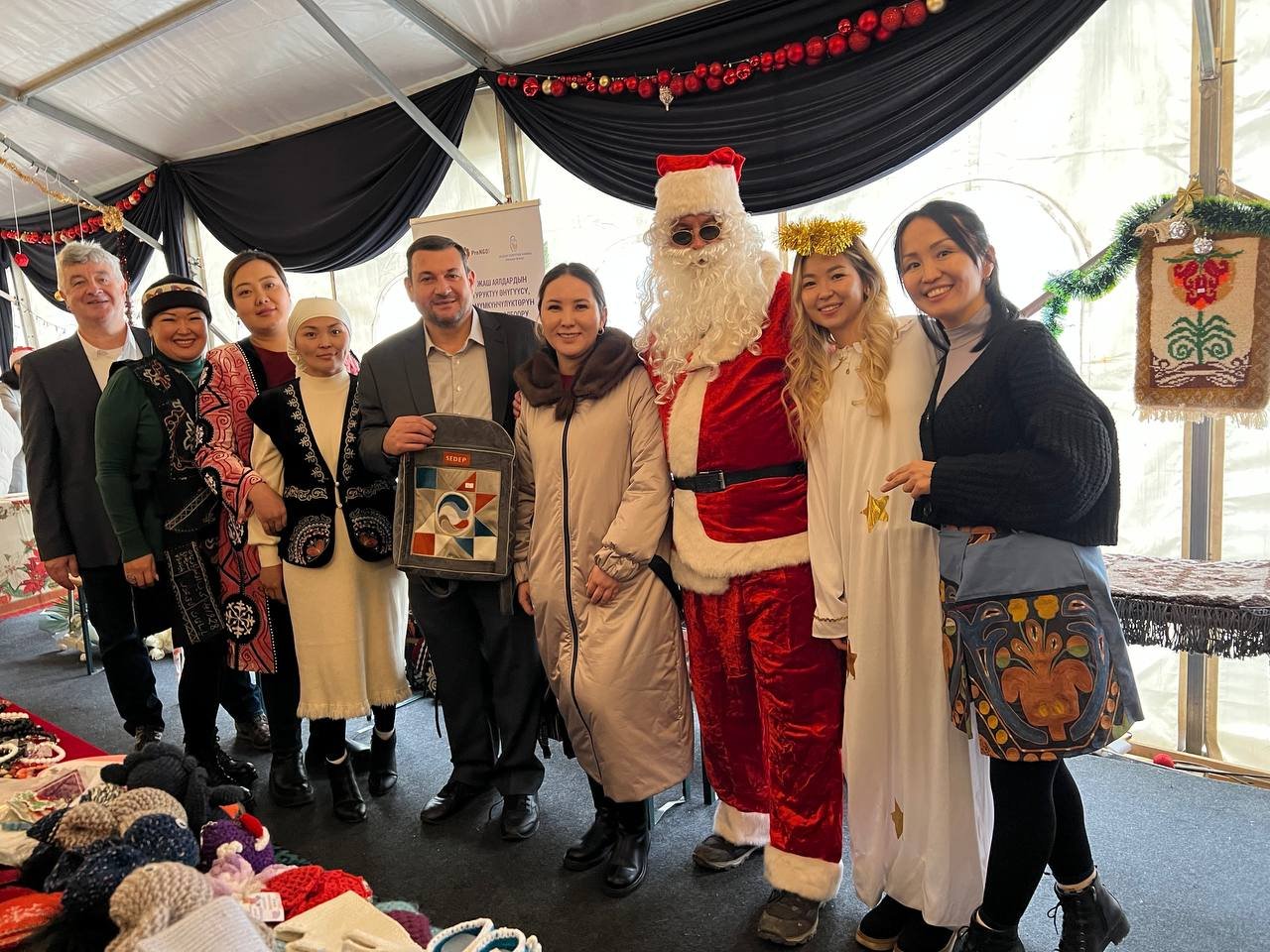
- Self-sustained international market access: Demonstrating strong initiative, 16 hub activists (6 coordinators and 10 hub members) self-funded their participation in major trade fairs and business forums in Europe and Central Asia. This international outreach expanded cross-border and international business networks.
- Civil society capacity-building: 25 CSOs & CBOs (local NGOs, women councils, youth committees) trained in gender-responsive policy monitoring, legislative analysis, and local government engagement.
- Local advocacy & inclusive decision-making: Hub coordinators, members, and CSO & CBO beneficiaries actively claimed their rights by engaging directly in local decision-making processes to advocate for their communities. Through their sustained efforts, 9 Local Socio-Economic Development Programmes (SEDPs) officially adopted creative economy, tourism, and gender inclusion into municipal plans and local budgets, ensuring community priorities are driven and secured by local voices.
- Public-Private-Community synergy: Spearheaded 32 joint initiatives alongside local authorities - spanning regional festivals, trade fairs, eco-campaigns, and policy dialogues - driving community cohesion and showcasing the power of collaborative local governance.
- Integrated psychosocial and legal support: Delivered 40+ psychological consultations for 121 women and 50 gender-legal consultations for 83 women, enhancing psychosocial well-being, legal empowerment, and informing policy recommendations (in particular on alimony rights and prevention of gender-based violence) to improve women's access to justice and protection.
- CSOs-led advocacy: to support evidence-based policymaking on women's entrepreneurship, gender equality, creative industries, youth engagement, and the prevention of domestic violence, 20 evidence-based policy recommendations were developed by the project's CSO monitoring group and submitted to 32 institutions, including 5 national authorities (the Ministry of Labour, Social Care and Migration; Administration of the President of the Kyrgyz Republic; Ombudsman; Jogorku Kenesh; and Coordination Council for Human Rights under the Cabinet of Ministers), 7 regional and district state administrations, 10 local self-government authorities, and 10 grassroots women's committees.
- 2 women-led institutions established and formally registered: The SEDEP-Kyzyl-Kiya Cooperative (for-profit entity) and the Sedep Association for Creative & Green Economy (non-profit NGO) unite 80+ women beneficiaries, supporting shared production, market access, business networking, and collective advocacy.
- Multi-stakeholder steering committee and strategic guidance: The 20-member Steering Committee, including 11 representatives of regional and local authorities, provides strategic oversight and guidance to strengthen project implementation and foster local ownership. Committee members also serve on evaluation panels for the selection of sub-grant beneficiaries and media contest winners, ensuring the transparency, accountability, and credibility of key project decisions.
- CSOs-driven sub-grant programme: Implemented 10 sub-grants promoting women's entrepreneurship through creative industries, local production, eco-tourism, handicrafts, and civic monitoring. The flexible sub-grant mechanism ensured community-responsive interventions tailored to local needs, while building the capacity of local CSOs in project management, financial administration, monitoring, reporting, and policy engagement with local authorities. The infographic below highlights the key results and impact achieved through the six-month implementation.
- 24x Production efficiency surge (Kyzyl-Kiya Hub): Modernised production of traditional Kyrgyz blankets and juurkan (quilts/mattresses) using automated machinery provided through a CSO-led sub-grant, reducing production time from 4 hours to just 10 minutes. Batken National TV highlights automated blanket production in Sedep-Kyzyl-Kiya Hub
- Project visibility and outreach: 400+ posts, reels and digital stories published across 15+ social media accounts of project partners, Women's Creative Hubs, trainers, beneficiaries, local authorities and tourism service providers, reaching 100,000+ views and substantially increasing the visibility of EU support, women's entrepreneurship, creative industries and sustainable tourism.
- Media contest: 40+ engaged journalists, bloggers, and media professionals, producing 60+ dedicated media products reaching 1,000,000+ viewers.
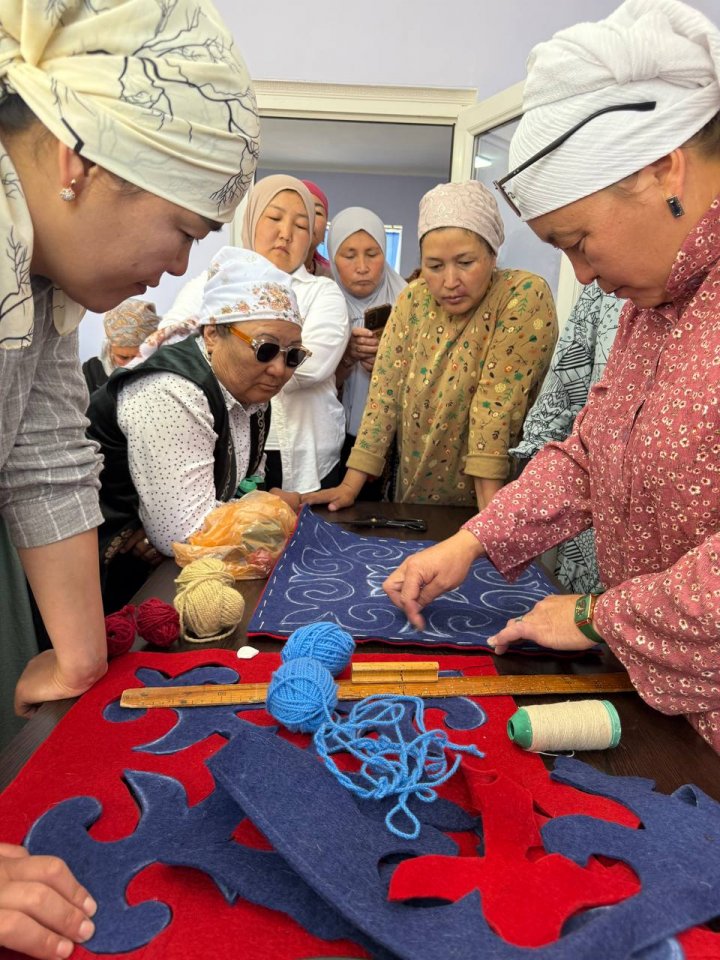
- Handcrafted visibility panels: 11 custom handcrafted wall panels were created by each Women Creative Hub using recycled materials (eco-approach) as capstone projects demonstrating learned patchwork techniques to showcase local culture and EU project visibility at public events, trainings, and community activities.
4. Stories of success
- Digital visibility & mapping (Kara-Koy destination): The tourism destination of Kara-Koy was officially registered on Google Maps for the first time as project beneficiaries (Kyrgyz-Ata Hub members) applied digital skills that they learnt under the Project to list their yurts & guest houses on online tourism platforms such as Booking.com and Google Maps.
- Inclusive community engagement: An unexpected positive results was the interest and participation of local men - four men joined SEDEP Hubs taking on roles such as sewing machine operators, rock-climbing instructors, and mountain guides. Local man working at sewing machine at Sedep-Kulundu Hub
- Legal protection precedent among beneficiary CSOs: Club of Young Activists, an Arstanbap-based CSO operating in a remote and conservative area, successfully defended its legal status in court by reversing a government liquidation decree - establishing a landmark, first-ever precedent for civil society in Kyrgyzstan, where NGOs had previously been unable to win court cases against such liquidation decisions.
- Demand-driven replication: Inspired by peer learning and the success of the SEDEP-Kulundu Hub, in January 2025 ten local women in International village - a remote cross-border community in Batken Region bordering Tajikistan - self-organised to establish their own creative sewing hub, demonstrating remarkable local ownership and initiative. Recognised for this grassroots effort, the hub joined the SEDEP network as the 11th Women's Creative Hub and subsequently secured five professional sewing machines worth over KGS 200,000 through support from GIZ. Moreover, three additional Women's Creative Hubs have recently been established in Bazar-Korgon and Aksy rayons of Jalal-Abad Region and are currently joining the SEDEP network, further demonstrating the model's attractiveness, community ownership and strong potential for replication.
- Certified competency training & municipal alignment: In direct response to a request from local authorities (Leilek Social Protection Department), the Sedep-Kulundu Hub delivered an intensive 1-month professional training programme that formally certified 14 local vulnerable women in traditional carpet weaving. This initiative laid a sustainable foundation for institutionalised vocational education, strengthening regional artisan visibility while aligning community skill-building with municipal development priorities to ensure long-term local support after project completion. ElTR National TV Features Carpet Production at Sedep-Kulundu Hub
- Institutional trust and national policy advocacy: Reflecting strong official trust built through the project's success in the Kyrgyz-Ata eco-tourism destination, the Plenipotentiary Representative of the President in Osh region selected SEDEP Project Manager Gulsana Abytova to represent Kyrgyz women leaders at an international JICA geopark management training in Japan (November 2025). This government endorsement enabled local implementing partner WPB to integrate women-driven recommendations into the Cabinet of Ministers' draft Resolution on national geopark regulations, embedding local eco-tourism initiatives into Kyrgyzstan's evolving legal framework.
5. Sustainability perspectives
- Institutional home for long-term growth: Registered NGO Sedep Association for Creative & Green Economy provides a long-term platform for networking, joint marketing, advocacy and business cooperation among women entrepreneurs and unifies Women Creative Hubs for further fundraising initiatives.
- Collective business model: Registered Sedep Cooperative enables joint production, shared procurement, collective marketing and improved market competitiveness.
- Recognisable market identity: The registered SEDEP trademark provides a common identity for future branding, product promotion and market recognition.
- Integration into the national creative economy ecosystem: The Sedep Association for Creative & Green Economy (NGO) is expected to join the Association of Creative Industries of Kyrgyzstan in 2026, providing its members with access to a nationwide ecosystem of creative entrepreneurs, professional networking, peer collaboration, business partnerships, and new market opportunities.
- Hub-based financial resilience: 11 Community Savings Groups continue operating as self-managed revolving financial mechanisms, providing members with access to small loans for business expansion, equipment and raw materials.
- Locally owned sustainability strategy: Coordinators and members of Women Creative Hubs are jointly developing a sustainability strategy, including a shared marketing strategy and 11 tailored sales plans, strengthening local ownership and ensuring business continuity beyond project completion.
- SEDEP hubs network expansion: SEDEP has developed a scalable and replicable model that integrates creative industries, sustainable tourism, women's economic empowerment and green economy. The model is already generating a multiplier effect beyond the project's direct intervention areas. Building on the experience of the project, groups of rural women have voluntarily organised themselves to establish four Women's Creative Hubs in Leilek, Bazar-Korgon and Aksy rayons, which are currently joining the SEDEP network. This community-driven expansion illustrates the model's relevance, local ownership and strong potential for sustainable replication.
- Secured community infrastructure: Agreements with local self-government authorities will enable the majority of Women's Creative Hubs (8 out of 11) to continue operating in publicly provided premises free of charge, significantly reducing operational costs and strengthening long-term sustainability.
- Institutionalisation in local development policy: Project approaches have been institutionalised through the integration of tourism and creative economy measures into nine Local Socio-Economic Development Programmes (SEDPs) for 2026-2029 period.
- Leveraging public financing for local development: The project strengthened the ability of local governments to mobilise existing public resources for local development. Local authority representatives were trained on the new Ministry of Economy and Commerce guidelines for accessing financing from the Regional Development Funds (RDFs). Since RDFs finance priorities included in SEDPs, creative industries and sustainable tourism measures have already been incorporated into nine SEDPs with the support of the project, local governments are now better positioned to secure RDF funding for the continued implementation of those initiatives.
- Strategic multi-stakeholder partnerships: 40 formal partnerships were established through Memoranda of Understanding and Cooperation, creating a strong multi-stakeholder support network for the continuation of project results. These partnerships bring together Women's Creative Hubs, civil society organisations, local authorities, educational institutions, museums, state natural parks and media organisations, strengthening local ownership, cross-sectoral collaboration and the long-term sustainability of SEDEP initiatives.
- Leadership for future resource mobilisation: The Director of the recently registered Sedep Association is an experienced expert with a strong track record in resource mobilisation and fundraising, providing a solid foundation for attracting future partnerships and securing additional investment to further expand the initiatives.
- Geo-tourism expertise for local sustainable development: In recognition of the SEDEP project’s contribution to eco-tourism, the local implementing partner WPB was nominated by the President's Plenipotentiary Office in Osh Region to attend JICA’s geo-tourism training in Japan. Having studied UNESCO Global Geoparks' best practices in heritage preservation, guide training, and community involvement, WPB plans to apply this expertise to develop Kara-Koi, Arstanbap, Toktogul, and Toguz-Toro into sustainable tourism models with a good potential to boost local incomes.
- Established market connections: Market linkages established through regional festivals, trade fairs, business networking events and digital promotion continue creating commercial opportunities for women-led hubs.
- Circular economy in practice: Circular economy principles have been integrated into production through recycling-based handicrafts, transforming textile remnants and other reusable materials into marketable products.
- Alignment with national development priorities: Sustainability of the Project is reinforced by the SME Support & Development Programme of the Kyrgyz Republic until 2030, adopted on 29 June 2026, which prioritises women’s economic empowerment, social enterprises, local entrepreneurship, industrial clusters, and creative economy - areas that closely align with the project's objectives. The Programme further strengthens this enabling environment through state-funded Social and Creative Vouchers, expanded loan guarantee schemes, child-friendly production spaces, shared equipment centres, and integration into the national SME-Hub digital platform.
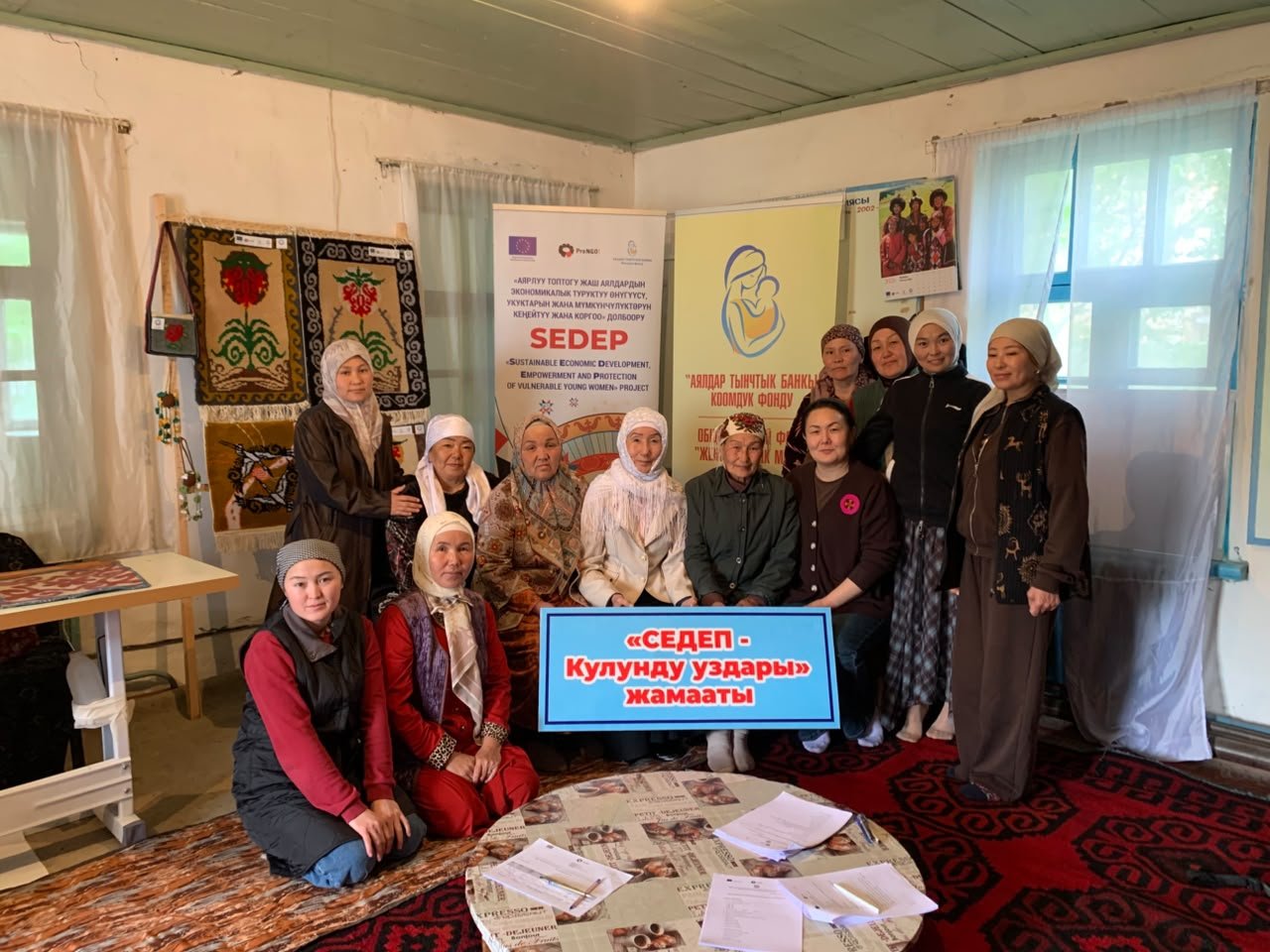
More project photos in Photogallery >>
Implementing Partners
Women’s Peace Bank (Osh, Kyrgyzstan)
Pro NGO! e. V. (Koeln, Germany)
Further information
instagram.com/womens.peace.bank
facebook.com/pfwomenspeacebank
Contacts:
Hans Born, Chairman
Begayim Sharsheeva, Project Coordinator